The girl who gave her name to a potato
Yes. A potato. I know, I know, those aren’t period. But grab a nice drink and sit yourself down. This story is CUTE! Once again I am taking you to the north of my country: Friesland

In 1905, a potato farmer and farming teacher in Friesland named Kornelis Lieuwes de Vries had grown a new type of potato. He was in the habit of doing that, just growing and inventing new crop. His other habit was naming those creations after his school children. Enter a diligent girl named Bintje Jansma, one of his students. Kornelis saw the same characteristics in his new potato! It grew diligently as well and so the new potato was named after his student Bintje.
But, this would not be a post about anthroponomy if we weren’t going to look at that name: Bintje.
Bintje is a merger of Bin and Tje. Tje (or tie) is always a diminutive. A man called Bint or Binne, could have a daughter named Bintje and especially in Friesland this was very common. But also in other places in The Netherlands there would be fathers named Jan, with daughters named Jantje.
My sources for the origins of this name are iffy from this point on, unfortunately. One source tells me bint literally means daughter in Frisian, but another contradicts that. Bern in Frisian means children. A fourth source brings it all back to the name Benedictus. I am also aware ‘bint’ means daughter in Arabic, and that especially is very cool, I think. Frisians were known for their excellent wool, Pallia Fresonica, and in the days of Charlemagne they travelled far and wide. Who know, is Bintje coming from Arabic? Wouldn’t that be cool!
But I need proof in documentation from the genealogical archives. The first mention of Binne in Friesland dates from the year 1534, where a gentleman named Binne Jouckes can be found in a court document from Leeuwarden.
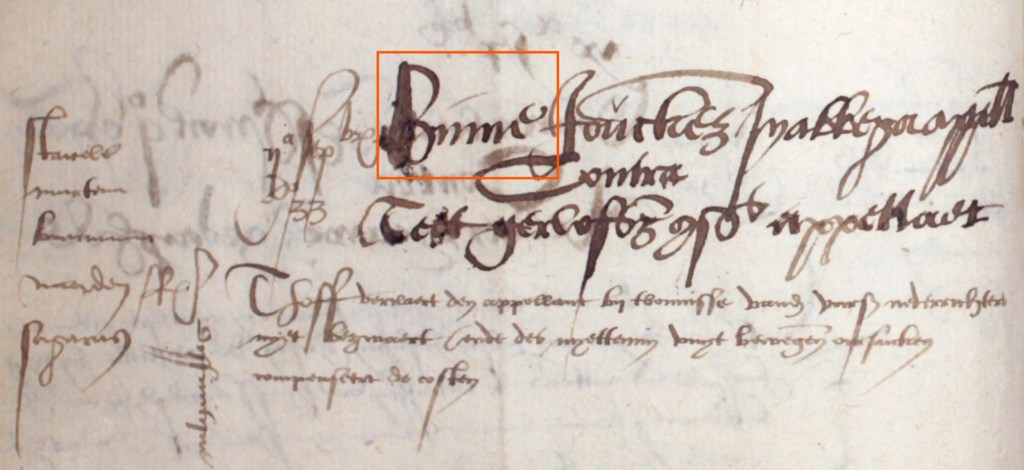
Then I found a bride named Bints, which is the same name as Bintje. She gets married on March 26, 1600:
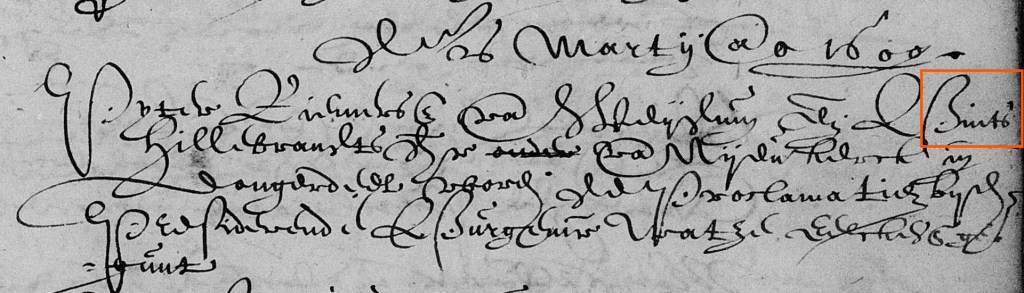
Remember: don’t just use an Ancestry entry. Be sure to click on the actual links to see the original document! Not only is this a LOT MORE FUN, you also get to verify the data listed.
I am now in the mood for potatoes…

A Closer look at Skjoldehamn
I have figured something out. Well, no, not exactly. This has actually been on my mind for quite some time. I realised I had ‘abandoned’ the Skjoldehamn project for a while now and most of the time when I do that, it is because there is something off. Grab a coffee, you might want to hear this if a) you are a Scadian, and b) you want to recreate historical clothing.
We need to take into consideration the person the clothing was found on. And although I knew of course this was a thing, I never connected the dots. Yah, I know, this is silly. Big time silly.
So, when it comes to the Skjoldehamn clothing, the person the clothing was found on, was either a minor or a very small person. Whatever I am making, it can never be the same size. Also, I need (and so should you!) take into consideration that not only the size but also the style might not fit you. Simply making the outfit big enough so that it fits you, might give you a carbon copy of the original, but are you going to wear it?
What I mean in this case is the neckline of the undershirt. A high neckline, like the one that was found in Skjoldehamn works:
a) if you are living in a very cold climate
b) if you have a slender frame
Now, I neither live in a cold climate and the slender frame happened in the last century… a high neckline simply looks very odd on me. Not everything is going to be flattering on everybody’s frame.
I have therefore decided that I am going to make some much needed alterations to the undertunic so that it will look better on me. The high collar has to go and the flap will be removed as well. I need a V-neck the way I am built. The undertunic will not look like the Skjoldehamn find anymore, but this is part of the dynamic hobby that is recreating historical clothing. You learn a lot and alterations are necessary to make an outfit that is good for YOU, to make sure you are comfortable wearing your garb at events.

A Rough Year
The year 1025 has been particularly rough. The village where Ava used to live was ransacked by religious fanatics around Lady Day, and she lost her beloved farm.
It is for that reason that this blog has been so silent this past year. There was a lot of pain and hurt, losing a farm and losing a rewarding day activity is bad enough, but when the culprit can be found in religious circles, there is a three way betrayal. But then, you already know these are not religious people; they only call themselves that. Pretending you believe in a higher being and at the same time creating homelessness and unemployment… Indeed, just like a proper crusade!
Ava has found new dwellings and her farm animals and loved ones will be safe there. But, sadly, this means she is forced to leave her beloved hometown. Soon after 12th Night 1026, the move will take place. There is however, as you can imagine, a lot of healing to be done. Fanatics, religious or not, are a threat to one’s wellbeing. But the good news is that the entire family is alive and, for the most part, physically unharmed.
Throwing a bible at you…
Relax, this one will not hurt you a bit!
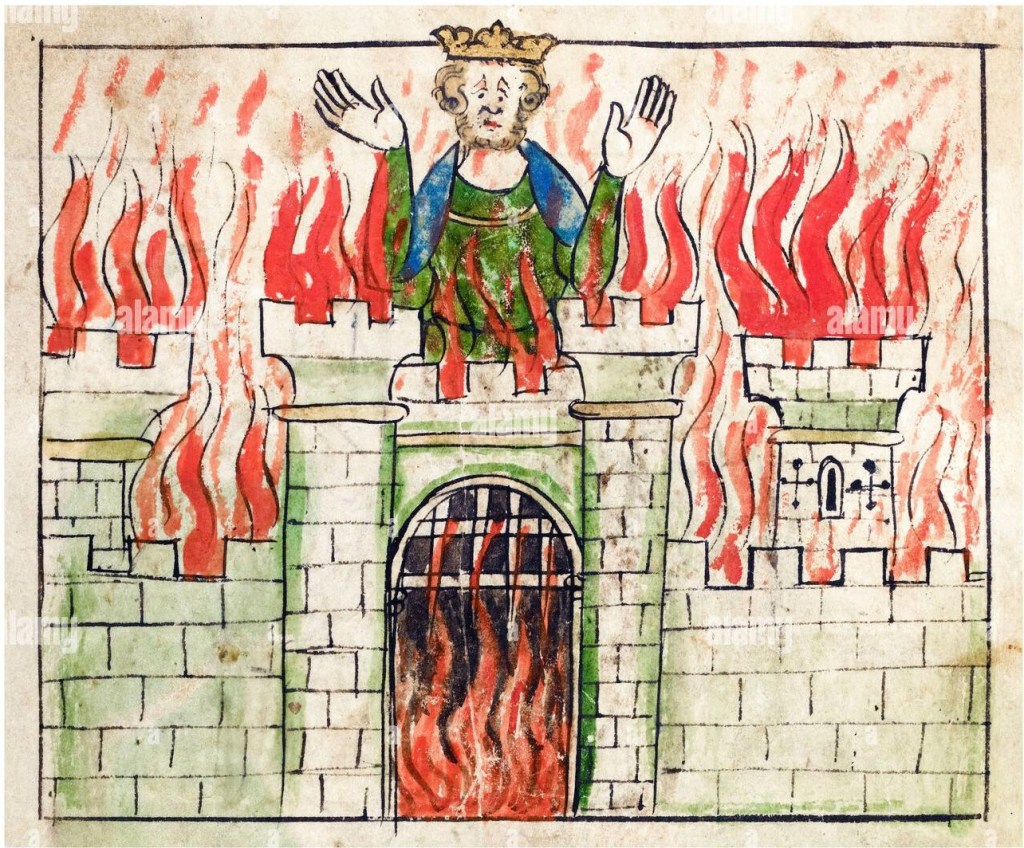
Please meet Jacob van Maerlant, a famous Flemish poet born in Bruges around the year 1230. He is known for being the first Flemish/Dutch poet who translated a lot of work from Latin to Flemish. Many church officials were not very happy about this because it meant regular people could get access to the bible… Jacob also wrote more than 230.000 short (mini) poems in Flemish and he is therefore the most prolific author in the Middle Dutch period.
In the year 1271, he started translating the “Historia Scholastica” by Petrus Comestor from Latin into Dutch. He did not just translate the work but created a book entirely written in rhyme.
It is clear the written work in rhyme is by Jacob van Maerlant himself, though the artwork, calligraphy and illumination is done by other artists. The earliest is from the year 1332 and is signed by Michiel van der Borch. I should add that Van Maerlant himself wasn’t alive anymore in those years, as he probably died around 1291 in Damme, modern day Belgium.

The book contains not only the Bible in rhyme, followed by the history of the Jewish revolt against the Romans, many years after the times of Jesus. The manuscript is elaborately illuminated with no less than 159 miniatures. Because of the author and the exquisite artwork it is truly a master piece of those times.
You can get an E-book at €25,99 of this wonderful book here.
 Ava's Corner